Managing Dog Obesity Through Activity
"My dog looks a little chubby — is it obese?" Many owners have this worry at some point. This article lays out how to objectively assess dog obesity and how to manage everyday weight with a focus on activity. The approach is not extreme fasting, but small daily activity habits.

Why dog obesity deserves attention
To put the conclusion first: dog obesity is not simply a matter of appearance. It can be linked to several health problems, so managing everyday body shape and activity matters. According to the American Animal Hospital Association (AAHA) Weight Management Guidelines (2014), overweight and obesity are among the most common nutrition-related problems in pets and can be associated with osteoarthritis, diabetes, and reduced exercise tolerance.
There are also long-term studies. In the study by Kealy et al. (2002) published in JAVMA, dogs kept lean through diet restriction lived longer than the group that was not, and age-related changes such as osteoarthritis appeared later. In other words, maintaining an ideal body shape is itself one pillar of health management.
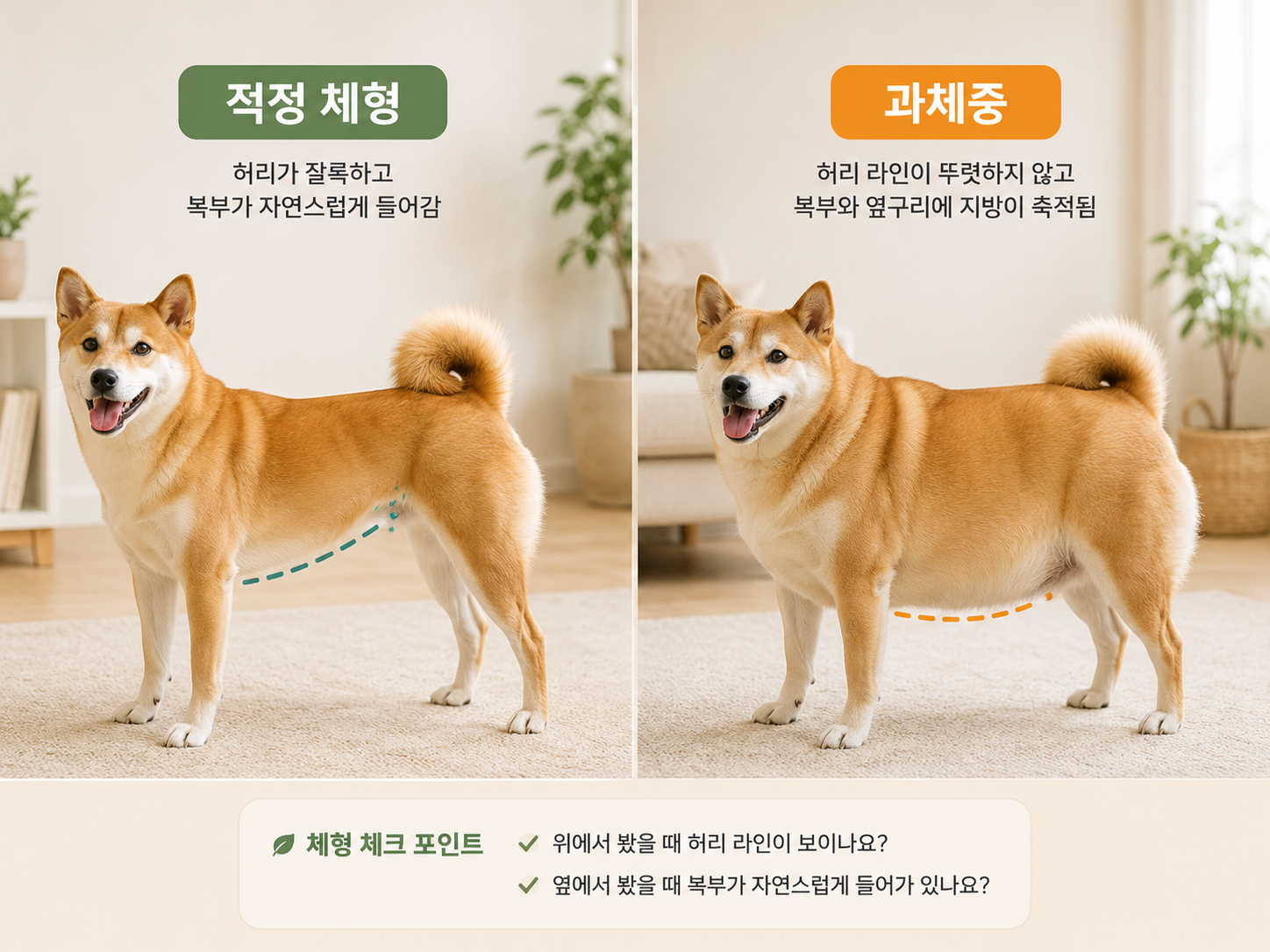
Is my dog obese? — Checking by body shape
Obesity is hard to judge from the weight number alone. Because the ideal weight differs by breed and skeletal frame, veterinary medicine uses a body-shape assessment scale called the Body Condition Score (BCS).
The 9-point Body Condition Score (BCS)
The World Small Animal Veterinary Association (WSAVA) body condition score guideline uses a scale from 1 to 9, with the ideal body shape at 4-5/9. 6/9 or above is overweight, and 8-9/9 is obese.
Checking ribs and waistline by hand at home
According to WSAVA criteria, an ideal body shape feels like this:
- Ribs: easily felt by hand without a thick fat layer
- Waistline: viewed from above, the waist tucks in noticeably behind the ribs
- Abdominal line: viewed from the side, the belly is tucked up
If the ribs are hard to feel or the waistline has disappeared, you can suspect overweight. For an accurate assessment, though, consulting a vet is recommended.
Why activity is central to weight management
Weight management is often associated only with adjusting food portions, but the AAHA guidelines recommend doing diet restriction and increased activity together. As activity increases, energy expenditure rises and it also helps maintain muscle mass.
How much activity is right for a dog?
The right amount of activity varies greatly by breed, age, and health condition. So rather than applying the same standard to every dog, it's more realistic to watch for changes against your own dog's usual activity pattern.
Differences in activity by senior status and breed
For senior dogs or dogs with weak joints, excessive exercise can actually be a burden. A short, frequent, low-intensity, and steady approach is recommended.
How to increase and manage activity in everyday life
Building a walk and play routine
- Split the daily walk into several short sessions to reduce the burden
- Add indoor activities such as nose work and ball play
- Don't overdo it at first — raise the intensity slowly
Why it has to go together with diet management
Even if you only increase activity, weight change can be slow if calorie intake stays the same. The key is to combine adjusting food portions and treats with increased activity. It's safest to decide a specific diet plan in consultation with your vet.
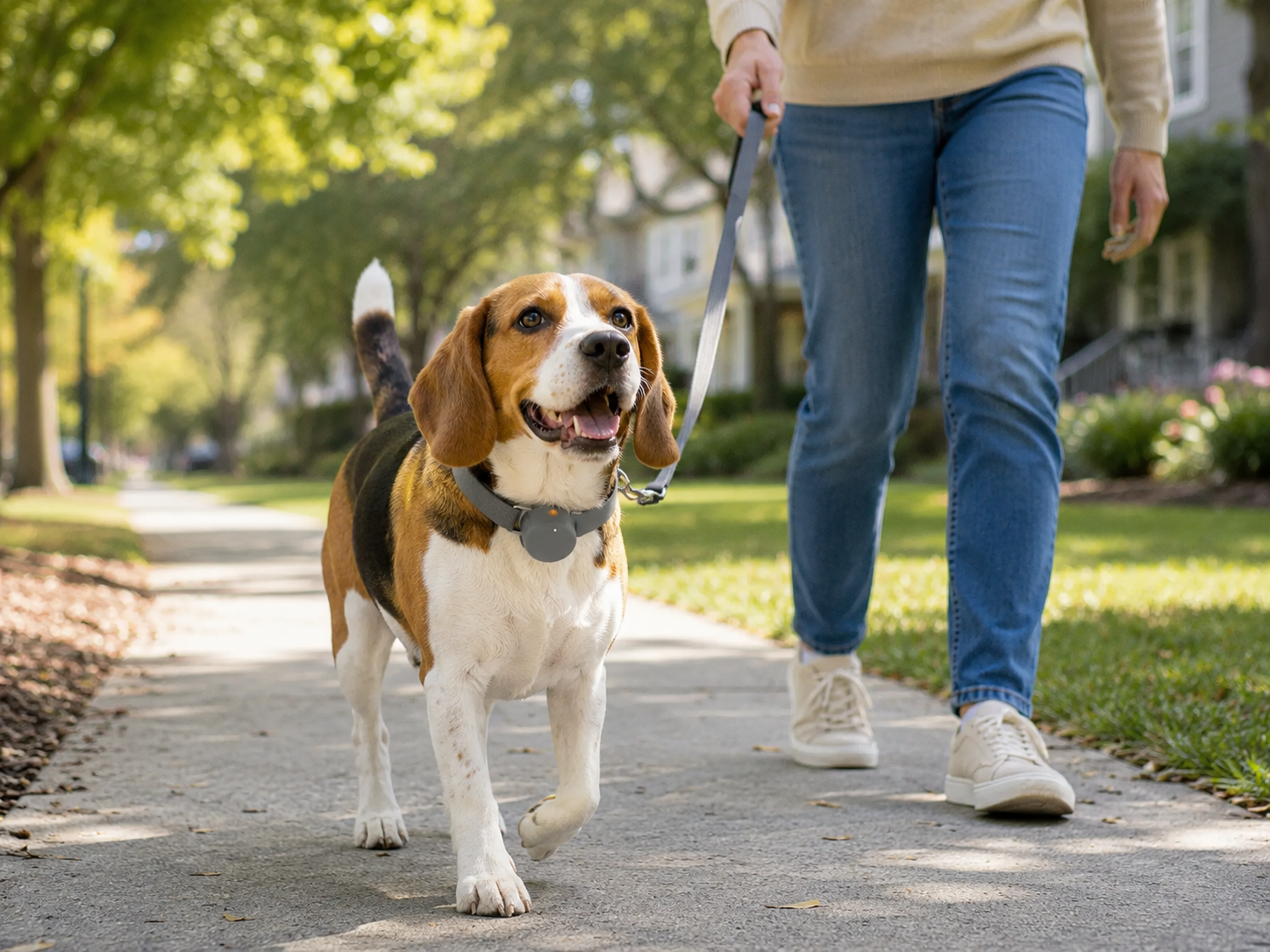
How to record activity changes with sense 1 home
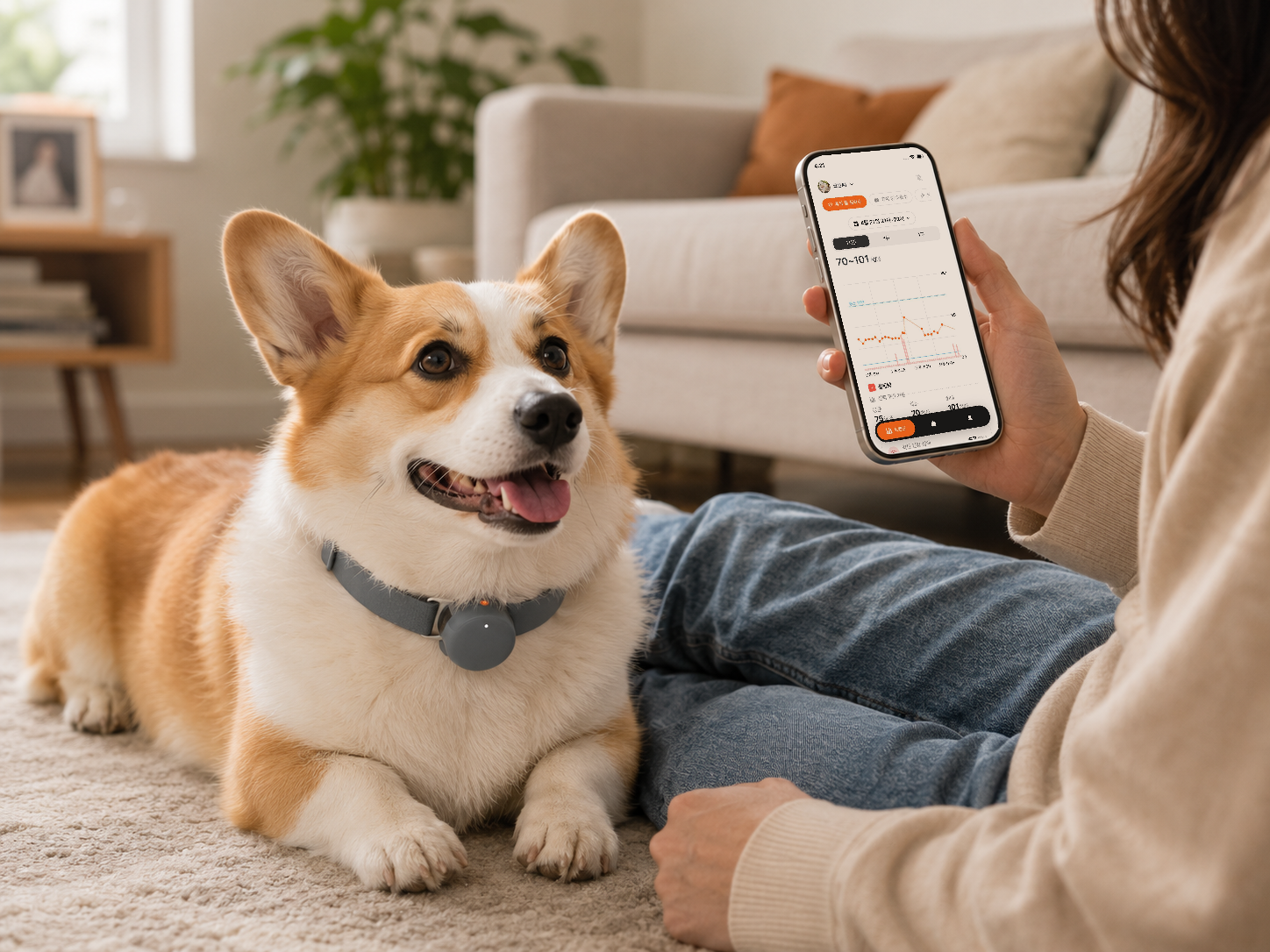
The hardest part of weight management is that it's difficult to see with your own eyes whether things are going well. cotons ai's sense 1 home records a dog's activity data day to day, helping owners watch for changes in the usual activity pattern.
You can use the data to watch how activity changes after you adjust the walk routine, and whether movement drops with weather or condition. Such records can help you grasp the trend of your weight-management efforts and spot changes from the usual activity pattern sooner through data.
Frequently asked questions
How do I check if my dog is obese?
Rather than the weight number, it's more accurate to look at the Body Condition Score (BCS). Check whether the ribs are easily felt and whether the waistline is visible from above. For an accurate judgment, a veterinary consultation is recommended.
How much daily activity is appropriate?
Because it varies by breed, age, and health condition, it's hard to apply a uniform standard. It's more practical to watch for changes against your dog's usual activity pattern.
Is increasing exercise alone enough to lose weight?
No. The AAHA guidelines recommend doing diet management and increased activity together. With exercise alone, change can be slow.
Key takeaways
- Dog obesity can be linked to osteoarthritis, diabetes, and more, so everyday management matters (AAHA)
- Obesity is judged by Body Condition Score (BCS) rather than weight, with the ideal shape at 4-5/9 (WSAVA)
- You can check at home whether the ribs are felt and the waistline is visible
- Weight management is recommended as diet restriction combined with increased activity (AAHA)
- Recording activity data helps you watch the trend of your management efforts
Closing
Managing dog obesity isn't something that ends overnight — it's built from small daily activity habits that add up. If you're curious about your dog's usual activity level, record each day's activity pattern with sense 1 home and watch the changes together. If you suspect a problem with weight or health, consulting a vet first is recommended.
This content is for general informational purposes only and does not replace veterinary care.
Sources / References
- American Animal Hospital Association (AAHA). 2014 AAHA Weight Management Guidelines for Dogs and Cats. 2014. https://www.aaha.org/aaha-guidelines/2014-aaha-weight-management-guidelines/
- World Small Animal Veterinary Association (WSAVA), Global Nutrition Committee. Body Condition Score (Dog). https://wsava.org/global-guidelines/global-nutrition-guidelines/
- Kealy RD, Lawler DF, Ballam JM, et al. "Effects of diet restriction on life span and age-related changes in dogs." Journal of the American Veterinary Medical Association (JAVMA), 2002;220(9):1315-1320. https://pubmed.ncbi.nlm.nih.gov/11991408/